
The Val d'Orcia looks effortless because generations of agriculture have given the landscape a clear visual rhythm. Fields follow hills, cypress trees punctuate roads, and villages occupy the highest ground. The photographer's task is not to add drama, but to recognize the order already present.
A cultural landscape
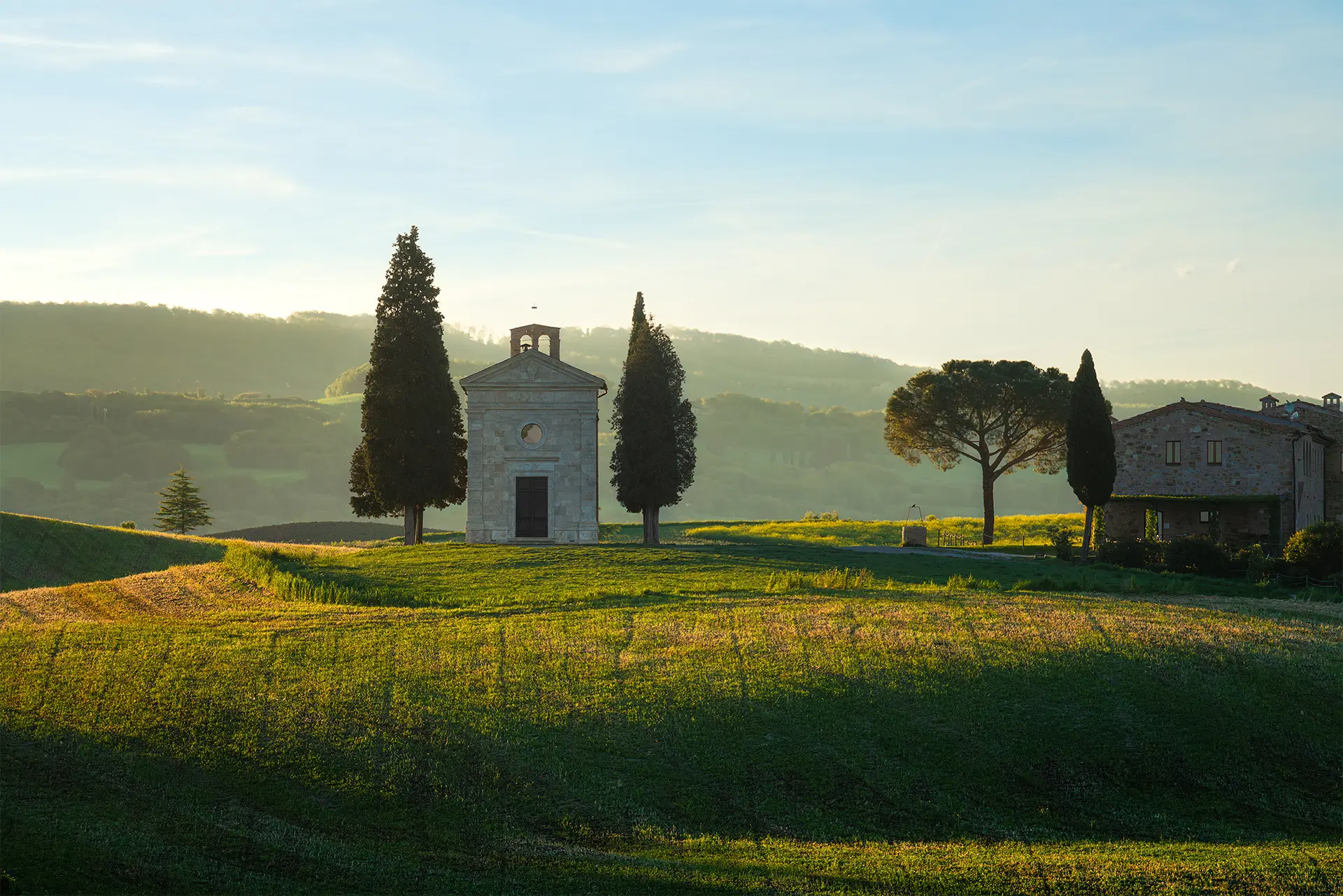
UNESCO recognizes the Val d'Orcia as a cultural landscape shaped during the Renaissance and celebrated for the relationship between people and nature. Pienza, Montalcino, Castiglione d'Orcia, Radicofani, and San Quirico d'Orcia form a network of towns within this wider terrain.
Treat the roads between them as part of the subject. Curves, rows of trees, farmhouses, and changing crops provide the visual grammar that connects the famous viewpoints.
Work with seasons
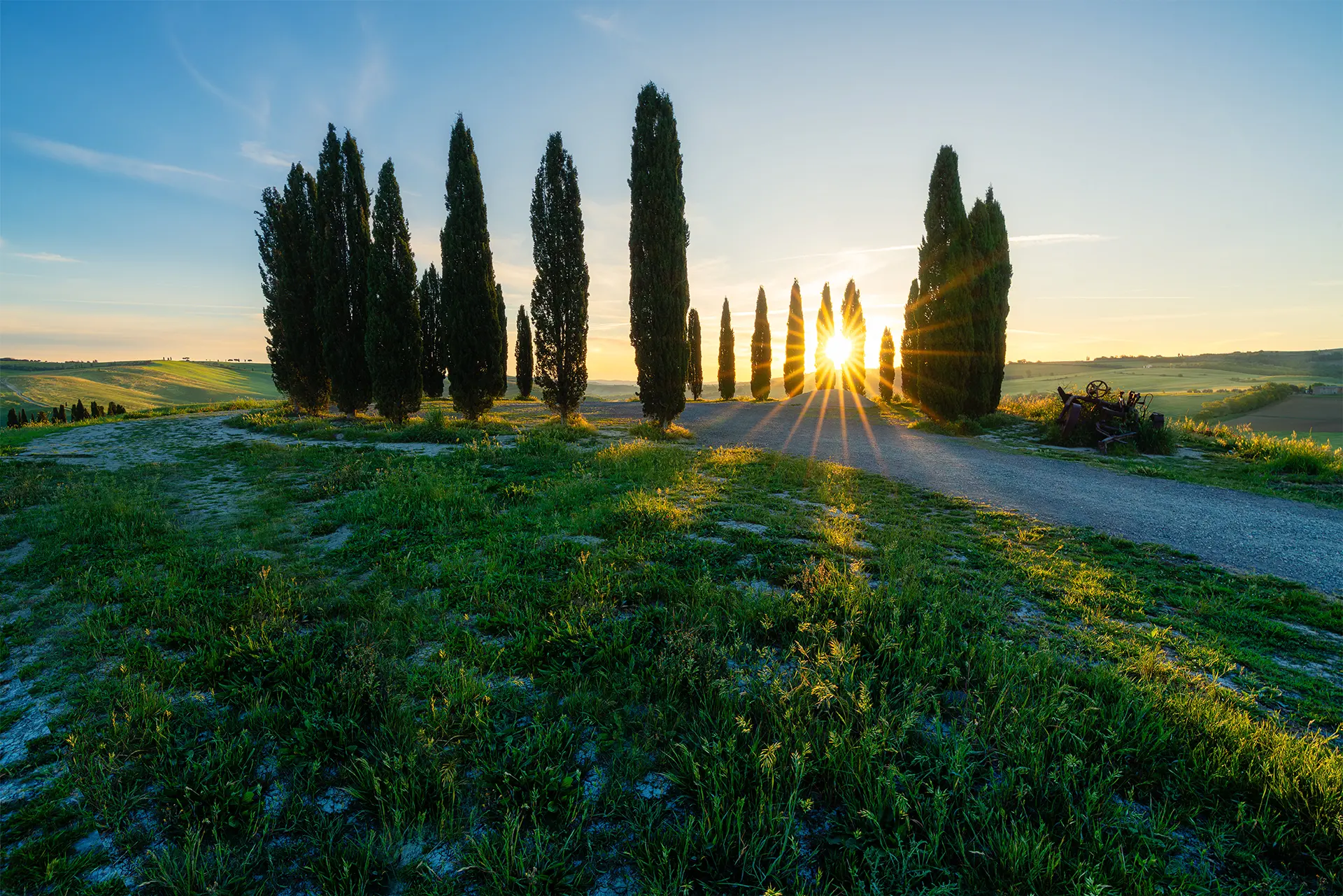
Spring brings green fields and unsettled skies; early summer turns hills warmer and more graphic; autumn softens the palette; winter exposes the structure of the land. Sunrise can bring mist into lower valleys, while late light rakes across the hills and reveals every fold.
A longer lens is often more useful than an ultra-wide one. Compressing ridges lets repeated lines and distant farms become a layered composition. Step away from the obvious foreground and let the shape of the land lead the image.
Slow roads, careful access
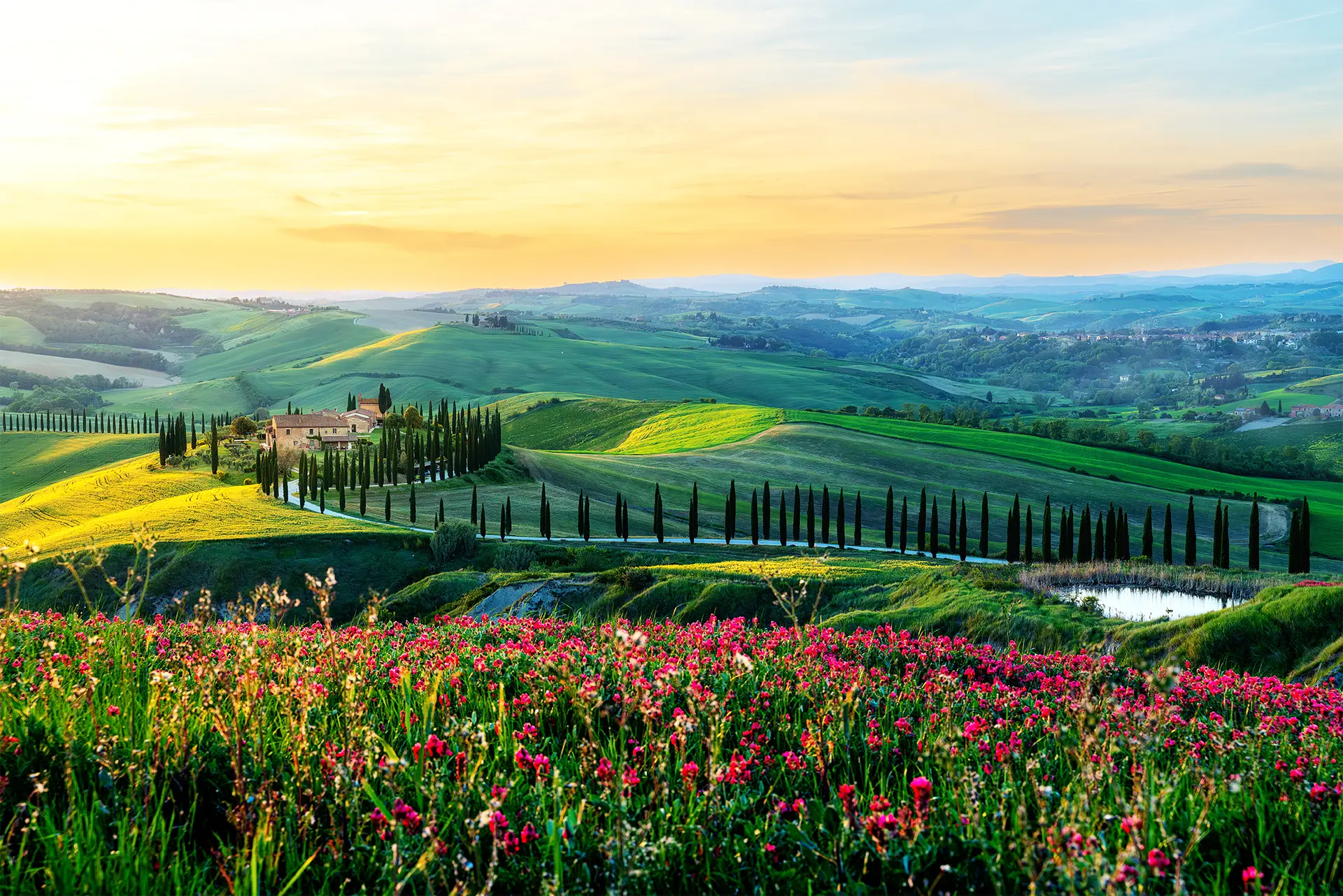
Many iconic compositions are made from public roads and recognized viewpoints, while the fields themselves are working private land. Park responsibly, avoid entrances and crops, and resist creating new paths. A slower, respectful approach suits both the place and the photographs it produces.